Target
The supply chain for Apple products at Target: iPads, iPods and accessories, stocked store by store.
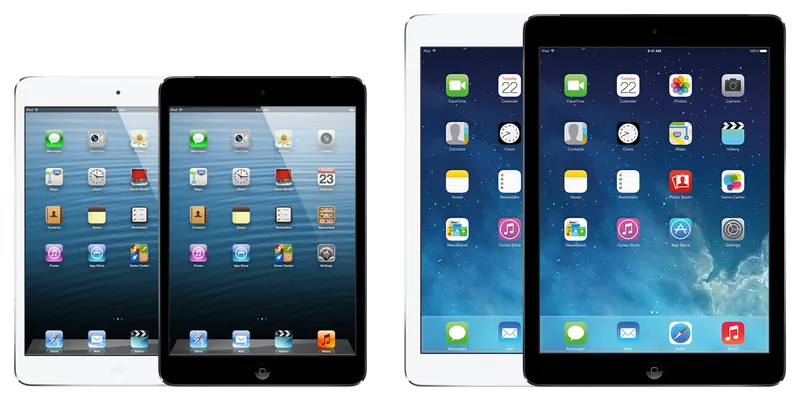
- Role
- Senior supply chain analyst, owner of supply-chain strategy for the Apple category
- Scale
- A $700M+ a year category across about 1,800 stores
- Result
- In-stock rate up 24%; market share up 3%
I owned supply-chain strategy for Target’s $700M+ Apple category across about 1,800 stores. I changed how systems built for everyday goods stocked Apple products, store by store, and allocated the iPad mini launch to each store. The in-stock rate rose 24% and market share 3%.
What I decided
Changed how systems stocked Apple, store by store
I changed how Target’s systems stocked Apple products, store by store, for one of the company’s largest businesses. In-stock levels mattered: its annual report counted shoppers’ view of them as a competitive factor.
Launched the 2012 Apple shop-in-shop rollout
I launched the rollout of the Apple shop-in-shop in 2012. One of the first shops carried most of Apple’s line, with a Target employee trained on Apple products.
Allocated the iPad mini launch to each store
I managed the most important allocation of Apple products at Target, for the iPad mini’s launch on 2 November 2012. Online ship times were about two weeks, Target’s included, so the units on each shelf were the units most shoppers could buy.
How it worked
Apple products on systems built for shampoo
The category held the iPads, iPods and accessories on Target’s shelves. Its retail systems were set up for everyday goods such as shampoo and toothpaste. Most of its goods moved through its distribution centers.
From two Apple shops to about two dozen
On 12 January 2012 Target confirmed a test of Apple shops inside 25 of its stores. Two were open in early May, when Target said it would drop Amazon’s Kindle and keep the iPad. By August, Twin Cities Business reported Apple shops in about two dozen Target stores.
Each store’s share, with no sales history
Allocation decided how many units each store received. Apple launch units went direct to each store, outside the distribution centers. A new product such as the iPad mini had no sales history, and once a store sold out, its sales stopped measuring demand.
Too few iPad minis, 21 days before Black Friday
The iPad mini went on sale on 2 November 2012, 21 days before Black Friday, which opens the US holiday shopping season. Fortune reported that white iPad mini pre-orders sold out in about 20 minutes. Apple later said it could not make enough of them in any week of the holiday quarter. The fight to allocate was intense.
iPads were Target’s top three Black Friday items
On Black Friday 2013, receipt data from InfoScout, a shopper panel, put Apple products at about 22% of Target’s early sales. Target’s three best-selling single items were all iPads, led by the iPad Air.
Change while I ran the category
What came next
In February 2021 Target introduced Apple at Target shops in 17 stores. It told CNBC that it had tested more prominent Apple displays nearly a decade earlier, and that the new shops went much further. By October 2022 they were in more than 150 stores.